adsense

Friday, September 11, 2020

Revolut Digital Bank official launch in Japan with subscription-based Billing


Digital banking service Revolut officially launched in Japan after a successful beta launch, a couple of days back.

            Revolut after a successful beta launch for its premium accounts has now expanded its offerings to the general public.

            The fintech is entering Japan with 3 subscription-based accounts. Account-holders have to pay to Revolut the subscription fees as per their chosen account type.

The tag line of Revolut pricing plans is " Our Pricing Plans - No surprises, just fair and honest pricing. Simply choose a plan with the features that you want."

            The 3 subscription-based accounts types are:

01)  Standard @ ¥0/m

02)  Premium @ ¥980/m or INR677/- as per present forex exchange rates

03)  Metal @ ¥1800/m or INR1244/- as per present forex exchange rates


Read more about Revolut Japan pricing plans @

https://www.revolut.com/en-JP/our-pricing-plans


Quote:

Nikolay Storonsky, CEO and founder of Revolut, said: “When spending or transferring money overseas, most people are unaware of the hidden fees that banks are charging them.”

“According to a report from the World Bank, international remittance fees in Japan are 2 times higher than in the US. The world is becoming more connected, and financial services should be supporting this, not hindering it.”

Unquote

As well as cutting remittances costs, Revolut users in Japan will have access to the fintech’s ‘super app’ which will allow them to track and budget their spending, split bills and create savings pots.

As reported, Revolut’s initial rollout in Japan will be limited to “international transfers” and “managing money in 23 currencies.” Registered users will also reportedly receive a Revolut-branded Visa debit card.

The Revolut App has so far been downloaded mostly by expats. The subscription plans may appeal to the local residents to try this out.

Subscription-based services are popular in Japan.

The Japanese subscription market broadly covers eight industries including fashion, restaurants and entertainment.

According to Yano Research Institute, the Japanese subscription market, covering eight industries, was estimated to be worth ¥562.74 billion ($5.18 billion) in fiscal 2018 ended last March. That’s projected to reach ¥777.80 billion in fiscal 2021 and ¥862.35 billion in 2023, it said

Toyota Motor Corp. became the first Japanese automaker to introduce a subscription-based car-leasing service. Hyundai Motor Co., Porsche AG and Ford Motor Co. already offer subscription services overseas.

In the beverage industry, Kirin Brewery Co.’s Home Tap service delivers 4 liters of fresh, direct-from-the-factory beer, to homes for a monthly fee of ¥8,100. The company attempted to reach consumers willing to pay more for a higher-quality product rather than those wanting to save money, but temporarily had to stop accepting orders for Home Tap due to strong demand.

So, the subscription-based Revolut plans are not new to Japanese residents, and they may be willing to try out the 2 fee-based plans.


Reference Articles:

01)  UK's Revolut launches digital banking app in Japan @ https://asia.nikkei.com/Business/Finance/UK-s-Revolut-launches-digital-banking-app-in-Japan

02)  Revolut Rolls Out Core App Services in Japanese Market @ https://www.financemagnates.com/fintech/payments/revolut-rolls-out-core-app-services-in-japanese-market/


Wednesday, September 9, 2020

Parentlane – India’s first Biller under the NPCIs BBPS Subscription category


In line with NPCIs BBPS Team philosophy new biller categories are being added to the BBPS (Bharat Bill Payment System) platform.

The latest biller category on BBPS is ‘Subscription Category’.


Subscription Bills are bills for services availed frequently. Subscription can be

01) for physical goods i.e Delivery of Milk every day, alternate day, only on weekends etc

or

02) for services eg., access to Gym daily over a month, quarter etc.

Under the subscription billing model, the customer pays in advance for a defined period to avail the goods or services.

Normally, at the end of the billing period, the charges for the next billing period are collected via Standing Instructions setup.

With subscriptions, customers make recurring payments for access to a product or service. A subscription might not seem much different from a one-time purchase of a t-shirt or water bottle.

To manage subscription payments, billers need to retain more information about its customers, so customers can be charged automatically in the future and maintain have access to your product.

Billers which specialise in specialised categories and do not fall under the broad biller categories i.e Electricity Bills, Phone Bills, Taxes etc can be clubbed under Subscription Biller Category.

‘Parentlane’, is one such biller which offers specialised services and does not fit into the broad biller categories.


Hence, the Subscription Biller Category fits Parentlane correctly.

Quote

Parentlane is India's first AI powered digital health platform empowers the new millennial women & doctors to monitor key indicators, get insights and proactive care solutions right from fertility, pregnancy till the baby's age of 5 years for a healthy development.

Parentlane is Incubated at Accel Partners Startup Pad, Bangalore and have raised Angel round of funding from Prominent Entrepreneurs

Unquote

Access the Parentlane website @ https://www.parentlane.com/

As of now, Parentlane has tied up with Razorpay to collect the recurring payments. Customer has to enter the Card Details and choose the subscription plan. Future payments on the chosen card will be done automatically as per the subscription plan.

The Payment facility via BBPS is not yet updated on Parentlane website. Hopefully, the same will be updated in the next couple of weeks.


Saturday, August 22, 2020

Karnataka Government – Please onboard BBPS for Loan Recoveries


Reference Article for this Blog @ https://www.newindianexpress.com/states/karnataka/2020/aug/22/poor-can-pay-home-loans-via-pigmy-collectors-2186886.html

Synopsis: Rajiv Gandhi Housing Corporation Limited is the nodal agency for enabling affordable flats in the government constructed apartments to the EWS (economically weaker sections) in Karnataka.

Under some schemes, the house owners have to repay the Loans granted by Rajiv Gandhi Housing Corporation Limited.

Karnataka Housing Minister V Somanna desires that there should be a frictionless way of loaner payment by the housing loan borrowers.

One option is collection of loan amounts on a daily basis by Pigmy Collectors ‘ .

****

Rajiv Gandhi Housing Corporation Limited was created in the year 2000 as a special purpose vehicle “To provide housing for socially and economically weaker sections of the society through effective implementation of Central and State housing schemes”.

 The Pigmy Collection process is a huge success in Karnataka. The Pigmy Collection process was pioneered by Syndicate Bank. The same was replicated by numerous financial institutions across the country.

In the present digitisation era, BBPS is beneficial over Pigmy Collection process. BBPS is a product of NPCI and is 100% Indian.

The transactions on the BBPS platform and is fast becoming the de-facto mode for a variety of Billers.  

A number of Banks are also familiar with the BBPS System Architecture and the integration with Rajiv Gandhi Housing Corporation Limited can be done seamlessly.

In fact, Karnataka can take the lead in driving loan recoveries via BBPS. The model if goes LIVE, can be replicated by other State Governments too.

To encourage Loan Borrowers to repay via BBPS without any breaks, a Reward Program can be designed.

This reward program can be a great motivator for the borrowers to pay regularly and minimise defaults.

Motivators: Reward Program for high performers

01) INR51/- cashback for the first loan repayment of the Day. The day starts at 12:01am

02) INR52/- cashback for the last loan repayment of the Day. The day ends at 11:59pm

03) INR53/- cashback to the highest loan re-payer of the Day. EG: One person may pay INR100/-, another personINR300/- another person INR500/- on the same day. So, cashback of INR53/- can be given to the person who has paid INR500/-.

04) INR21/- cashback to persons who have continuously paid for Seven Days. The payment can be little as INR25/- on a single day.

05) INR101/- cashback to persons who have continuously paid for Fifteen Days. The payment can be little as INR25/- on a single day.

06) The Cashback awards to be announced every working day by 11.00am. This will build up the excitement.

07) Brief details of the daily award winners can be highlighted in the social media pages of the respective departments. This will build up the excitement to repay every day, whatever small amount it may be.

08) The cashback amounts can be reset as per public demand.   


Loan Collections via BBPS is very simple and can be done by the Loan Borrower/immediate family without much effort.

A)     Rajiv Gandhi Housing Corporation Limited onboards BBPS as a biller.

B)     RGRHCL Loan Recovery Module is linked to BBPS. The module should be capable of real-time data capture.

C)     Online Repayment – Net Banking/Mobile Banking/eWallets/Apps like PhonePe, Paytm, Google Pay, NPCI-BHIM etc.  The Loan Borrowers log into any BBPS App and initiate the loan repayment.

D)    Offline Repayment – i.e Cash. The Loan Borrowers walk into any BBPS Physical Counter and repay the loan amount via Cash Deposit.  


Quote:

Poor can pay home loans via pigmy collectors

The state government, which claims it to be the first such initiative in the country, is expected to launch it by the first week of September.


The Department of Housing is soon introducing a novel way for the poor, who have bought affordable flats in the government constructed apartments, to pay home loans easily. Instead of paying equated monthly instalments (EMIs), they can opt to pay small amounts every day through pigmy collectors.


The state government, which claims it to be the first such initiative in the country, is expected to launch it by the first week of September. Over one lakh flats are under construction now, of which 50,000 are in BBMP limits. Under the housing scheme for economically weaker sections, a one-BHK house would cost Rs 10.56 lakh, of which the state and central governments give a subsidy of Rs 2.71 lakh for general and Rs 3.50 lakh for SC/ST beneficiaries.


The government has selected close to 86,000 beneficiaries. Two BHK costs Rs 15 lakh and will be allotted through auction. Payment options for 2BHK will be initiated later. Rajiv Gandhi Housing Corporation Ltd chairman Ram Prasath Manohar said the novel initiative is the brainchild of Housing Minister V Somanna. Most of the beneficiaries are daily wage workers, who may find it difficult to pay EMIs.


“That’s why we are introducing the pigmy system, where one can pay every day Rs 50-100 to the authorised pigmy collector. We will draw pigmy collectors from banks, and each collector will be given 100 beneficiaries and a hand-held device. They will go to the doorsteps of beneficiaries, collect the amount and enter the amount on the machine on the spot. Immediately, an SMS alert will be sent to the beneficiary,’’ he said. The housing project is expected to be completed by 2022.

Unquote

Wednesday, August 19, 2020

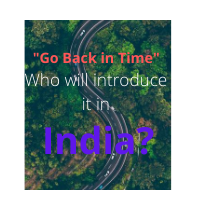
Samsung Pay – Go Back in Time. Who will introduce it in India?

Samsung Pay in association with Curve announced the launch of Samsung Pay Card for UK customers on August 18th, 2020.


The tagline of Samsung Pay Card is “Introducing Samsung Pay Card, powered by Curve. Stored in your Samsung Pay wallet, it’s a digital card that simplifies your spending’.

            Samsung Pay Card in UK, is a digital-first card powered by London-based Curve, which consolidates existing credit and debit cards into one — i.e Samsung Pay Card, a new Mastercard debit card from the mobile handset giant.

            The main USP of this joint launch is the consolidation of customer’s existing credit and debit cards into one card – i.e Samsung Pay Card.

            The consolidation is available for both MasterCard Visa Cards. AMEX and few other Loyalty Cards are already on Samsung Pay. Thus, customers can combine majority of their credit cards and debit cards into the Samsung Pay Card.

            There are numerous benefits available for the Samsung Pay Card users.

            One major benefit will be Curve’s proprietary tool, “Go Back in Time”.

            Curve’s “Go Back in Time” Tag Line is - Paid with the wrong Card? -

            The Curve User, can simply rewind. Curve’s unique Go Back in Time feature lets the card holder switch payments from one card to another, up to 90 days after the payment was made!

“Go Back in Time”, allows the Curve user to move transactions made on using your Curve card from one payment card in your Curve app to another. It's free, and can be done entirely in the app!

            The 90 days window was recently introduced after the Covid19 blowout, from the earlier 14 days window.

            Of course, there are Terms and Conditions for the usage of Curve’s “Go Back in Time”. The users have to be aware of a) Curve Charges b) Card issuers charges c) Only available once for each transaction.

            The “Go Back in Time”, feature will be really useful for BBPS Transactions.

01) Bank account holders can set up Auto Pay for the respective bills.

02) On ‘Auto Pay’, transactions account holders can choose to shift the transaction to another credit card or debit card, depending on the benefits associated with the shift.

03) Account Holders need not set-up Auto Pay to multiple cards.

04) Account Holders can set up for Auto Pay for 1 default card, and then move the transactions around.

05) This way they need not worry to maintain adequate balances in multiple bank accounts.

So, who will introduce “Go Back in Time”, feature in India.

            References:

01) https://support.imaginecurve.com/hc/en-gb/articles/115003750829-What-is-Go-Back-in-Time-

02) https://news.samsung.com/uk/samsung-gives-millions-of-customers-more-control-over-their-money-with-the-all-new-samsung-pay-card-powered-by-curve

03) Curve extends ‘time travel’ to 3 months, letting users make pre-coronavirus card decisions


Tuesday, August 18, 2020

How can Odisha’s 200 + Bijulee Didis on board BBPS?


How Odisha’s 200 bijulee didis are ensuring uninterrupted electricity to rural areas


Bijulee or Bijli Didis are assisting CESU to collect electricity bills from the villagers. The villagers in the command area of Bijulee Didis were always willing to pay the electricity bills.

The challenge the villagers faced was the non-availability of electricity bills payment avenues. It was a bit of a challenge to pay the electricity bills. They were unwilling to labelled as defaulters.

The villagers also wanted a superior customer service from the electric companies.

To boost the confidence of the villagers, in August 2019 Smart Power India (SPI), a subsidiary of the Rockefeller Foundation, working in the area of rural electrification, and Central Electricity Supply Utility of Odisha (CESU) joined hands to work on a model to improve electricity access and reliability in rural areas in Odisha.

SPI has been actively working towards developing scalable sustainable models that can improve rural electrification in India.

‘Model Distribution Zone’ (MDZ) program rolled out in August 2019 as partnership between SPI and CESU with an aim to work on a model to improve electricity access and reliability in rural areas in Odisha.

Both entities are working together to develop and implement Model Distribution Zone in select area to demonstrate improvements in electricity service by enhancing reliability and customer services.

Under the program, Women Self Help Groups (WSHGs) are engaged as micro-franchisees by CESU to perform metering, billing and collection activities.

To ensure the speedy resolution of customer complaints, customer care capacity has also been enhanced. These measures will give relief to 550,000+ rural lives in 630 villages that come under MDZ program.


Ensuring timely generation and payment of bills, CESU is providing billing information through SMSs / e-mail and on demand of the consumers through the toll free number of call centre. 

Consumers can pay their electricity dues online through various digital mode / mobile App like Paytm and Airtel / Debit Card / Credit Card etc.

Consumers can make payment through cheques maintaining the social distance measure by availing Cheque drop facilities at different offices of CESU.

CESU has also announced a special rebate of 4% on and above the existing rebates and incentives for making payment of March and April bills to reduce burden on rural households, enterprises and small industries.

Still the villagers prefer to pay their electricity bills in cash. This is where the Bijulee Didis come into play. The Bijulee Didis collect cash for the electricity bills and hand over the necessary receipts to the villagers.

The Bijulee Didis in turn update the collection details to their controlling office.

The Bijulee Didis through their linked SHGs get a commission for the bills collected via Cash from their villagers.

The challenge here is to ensure Bijulee Didis get the commission even when villagers pay the electricity bills via the Digital Mode.

The spade work done by Bijulee Didis in encouraging the villagers to pay the electricity bills in time has to be acknowledged.

How can Odisha’s 200 + Bijulee Didis on board BBPS?

Any thoughts here?  


References:


https://www.cescoorissa.com/franchisee/Base_Paper.pdf dt.November 2012

https://www.mycitylinks.in/women-power-cesu-success dt.03/10/2018

https://yourstory.com/herstory/2020/08/odisha-bijulee-didis-rural-electricity-power dt.17/08/2020


LinkWithin

Related Posts with Thumbnails

Disclaimer

The thoughts in this BLOG are personal, and reflect only my view on the subject.
This are not the views of my Employers.
All images, logos rights rest with the Original TitleHolders

All efforts have been made to make this information as accurate as possible, N Prashant will not be responsible for any loss to any person caused by inaccuracy in the information available on this Website. Relevent Official Gazettes Communications may be consulted for an accurate information. Any discrepancy found may be brought to the notice of N Prashant